When the accounts don't come out, the stories come out.
28-07-2021
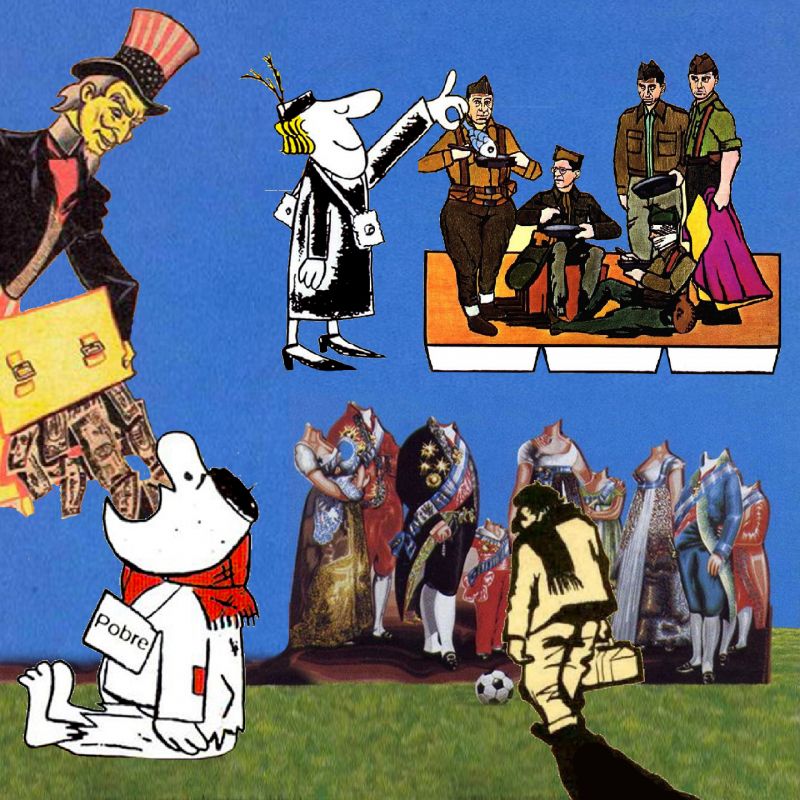
When the accounts don’t come out, the stories come out. I heard this kind of saying a few years ago. The proverb comes to say, basically, that the best ideas, the best stories, arise in difficult times, bringing out the most creative ingenuity of the human being.
During Francoism, the seventh art was gagged with censorship. [1] This already existed before Primo de Rivera, but the moral content of the films began to be more closely controlled at this time. The art world had to look for new formulas, artists had to squeeze their wits to be able to count, show or narrate the reality of the country without being censored. This generation of artists includes one of the most important directors of Spanish cinema, Luis García Berlanga.
This Valencian filmmaker born in 1921, whose centenary is commemorated today, grew as a filmmaker under the shadow of the code of censorship, adapting and looking for new formulas for comedy.
In the mid-1940s, after the declaration of the republic and the first elections, a film movement known as Italian neorealism was established. This one, whose foundation stone was Rome, open city (1945, Rosselini), shows the most bitter face of the postwar period and a new way of narrating, alien to American conventionalisms. As a counterpoint, Spain, at the dawn of the dictatorship, does not show, or does not let show, the reality of the country in its cinema. After the restrictions imposed by the regime, Berlanga’s gaze starts by making use of comedy as a translucent veil to disguise the reality of a Spain punished by hunger and misery, stretching the tragedy with its acid, folkloric and parodic style. These absurd situations are an influence of the absurd theater and the esperpento, of writers like Valle-Inclán, Jardiel Poncela or the same Miguel Mihura, with whom he worked for the script of the film Bienvenido, Mister Marshall (1953, Berlanga)
His film reaches the stage of the Transition, a period without the slab of censorship in which he shows more unleashed than ever. During this stage the parody of the bourgeois class of Francoism emerges in its national trilogy, starting with The National Shotgun (1978, Berlanga). His filmography has been dissecting with a scalpel the history and the Spanish society of the twentieth century, from the postwar to the transition.
This 2021, year of the centenary of his birth, are many events that have once again valued the career of the Valencian director: various exhibitions focused on his career, the acceptance by the RAE of the Berlin adjective and, of course, the legacy he deposited in 2008 at the Instituto Cervantes, which contained the unpublished script of the film ¡Viva Rusia! which would be the fourth part of the "Nacional" saga.
Author: Borja Guilló, technician of the School Museum.