The dress of woman of the Camp d'Elx t
12-03-2021


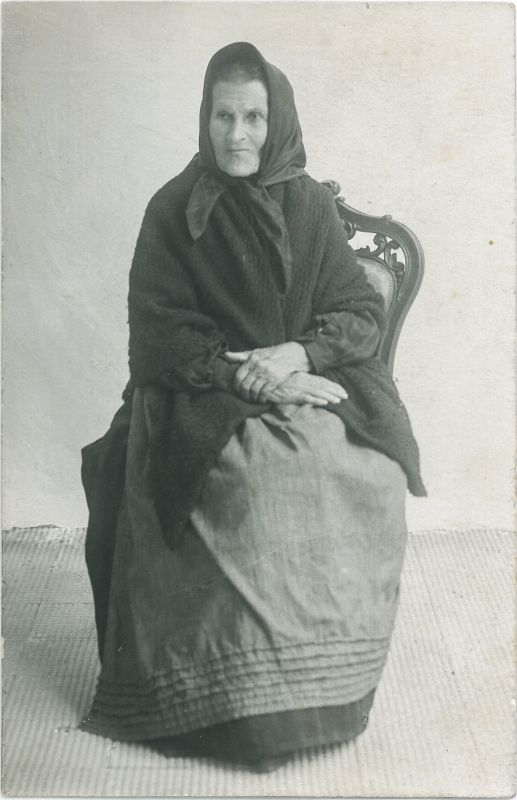
The new exhibition of the museum "Rural women, invisible work", as its name indicates, deals with the issue of rural women and vindicates the importance of their work in domestic work and agriculture. One of the pieces that are part of the show is a female mannequin, with the traditional clothes that she wore in the rural environment during the first half of the twentieth century.
The dress was a sign of social distinction: it showed the differences between the countryside and the city, between social classes, between women and men... as well as the day-to-day. That is, like today, he wasn’t dressed the same for work as he was for a celebration or dinner. Newspaper, work, holiday costumes... So how did the woman from the Camp d'Elx dress?
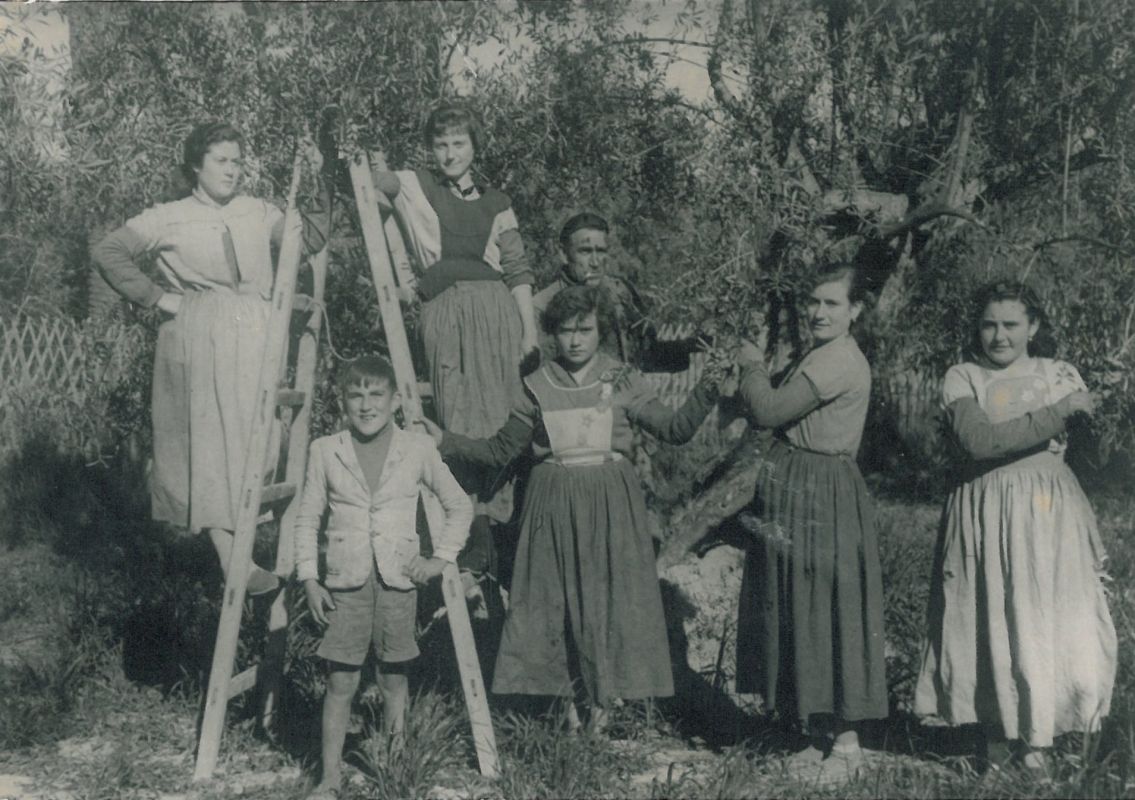
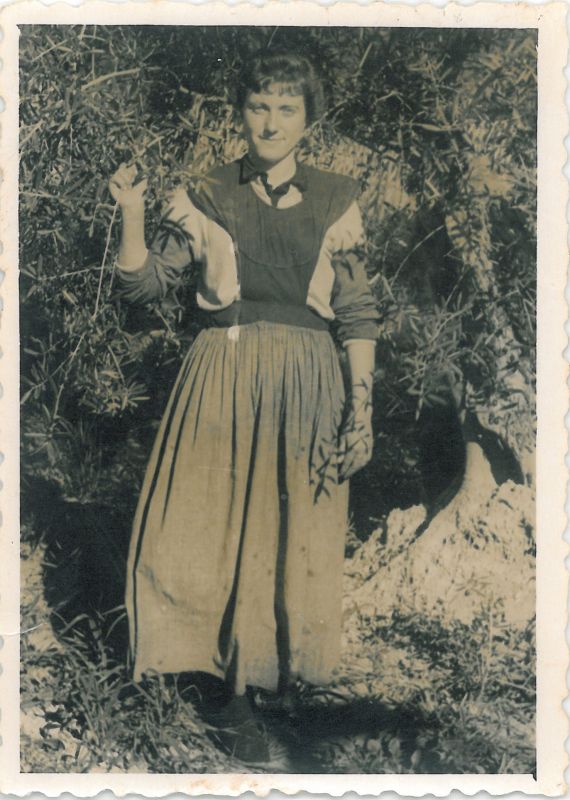
The woman usually wore a white shirt, long skirt and apron with overalls. To work in the field (cultivating the land, collecting the crops, feeding the animals...) he used an old man’s shirt, long-sleeved-whether summer or winter-to protect himself from the sun and possible scratches. In addition, to protect their arms, they used dark-colored sleeves with rubber bands on their wrists and forearms to adjust them (image 1). They covered their legs with a long skirt and, on top, a skirt. They could not miss the overalls with pockets, where they kept their things while working (image 2). All the clothes they wore were made of cotton and used reused fabrics, that is, they wore old clothes that were no longer worn to make the new one. They protected the neck with the "bundle" handkerchief, which was called that because with this type of handkerchief they made the "bag" to carry clothes or other belongings, putting everything in the center of the handkerchief and joining and tying the four peaks later (image 3). The head was covered with the same scarf or other, always of dark color, that adjusted the face tying it under the chin. In addition, in hot weather they wore a large hat, which protected them from the sun’s rays.
At this point, it is necessary to clarify that fashion was an urban phenomenon and that what was dressed in the field was more linked to the functional and the comfortable: not stain, not scratch, not burn by the sun, etc.
As for the underwear, the women of the camp wore a bra, an undershirt or a camisole and a petticoat, but, apparently, in the ancient times to which we are referring, they did not wear panties... According to oral testimonies preserved in the museum, in the past, they claim to have seen women in the field urinating standing...
On those occasions, the woman could wear some long, very simple earring, as well as makeup, rouge and/or lipstick, mainly. Some of our informants remember seeing in their mothers' and grandmothers' dressing rooms eyelash curlers and hair tongs, tongs with many teeth that were heated to the fire to comb the hair with waves.
The progress made over the last 100 years with regard to the differences between the countryside and the city is enormous, also with regard to men’s and women’s clothing, as can be seen from the following example. In May 1911, Diario de Alicante published an article about the commotion that a woman provoked, described as "easy", because she dared to go out into the street with a "skirt-pants", for which she was persecuted, jeered, victim of rude jokes and cornered by an angry crowd... And this in a city, in the provincial capital... what would have happened to that woman if this had happened in a rural area?
Today, clothing is more homogenized. Carlos Ferrater (1999) spoke of the democratization of the way of dress (with respect to the country-city), more than twenty years ago, but is it really democratized? Does the man wear a dress or a skirt without being judged? Can the woman dress as she pleases? What happened a few days ago at the Goya awards gala shows the opposite... don’t you think?
Author: Marian Tristán, coordinator of the School Museum.
Sources and bibliography:
- Archive of the Pusol School Museum: interview with Rosa Vicente García, neighbor of Puçol and pedaneous mayor [9 March 2021], unpublished.
- Ferrater, C. (1999): «Daily life. Leisure», in The beginnings of modernization in Alicante. 1882-1914. Alicante, Mediterranean Savings Bank, p.332-334.
- Soler, A. and Brotons. B. (1986): S'ha perdut una cultura del camp d'Elx, 1986, Elche, the author.