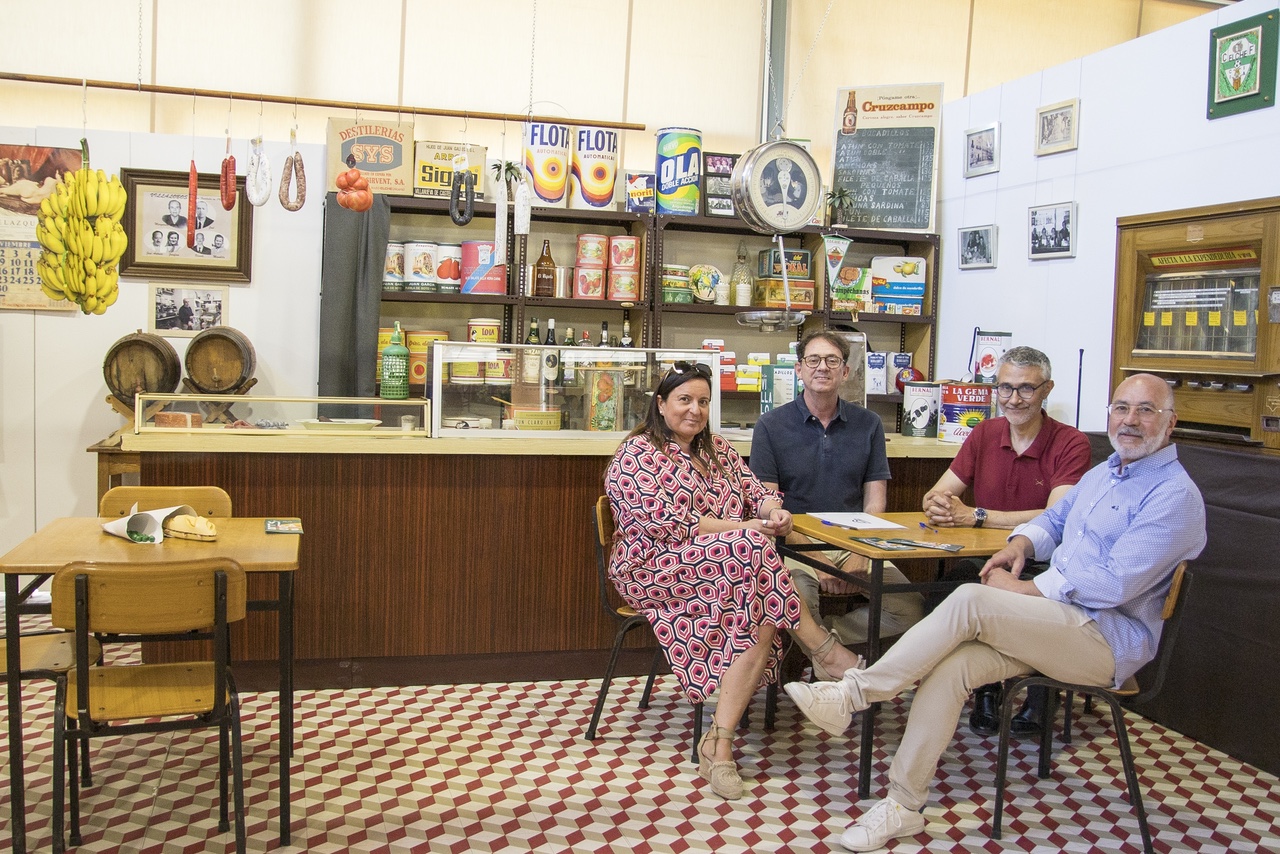
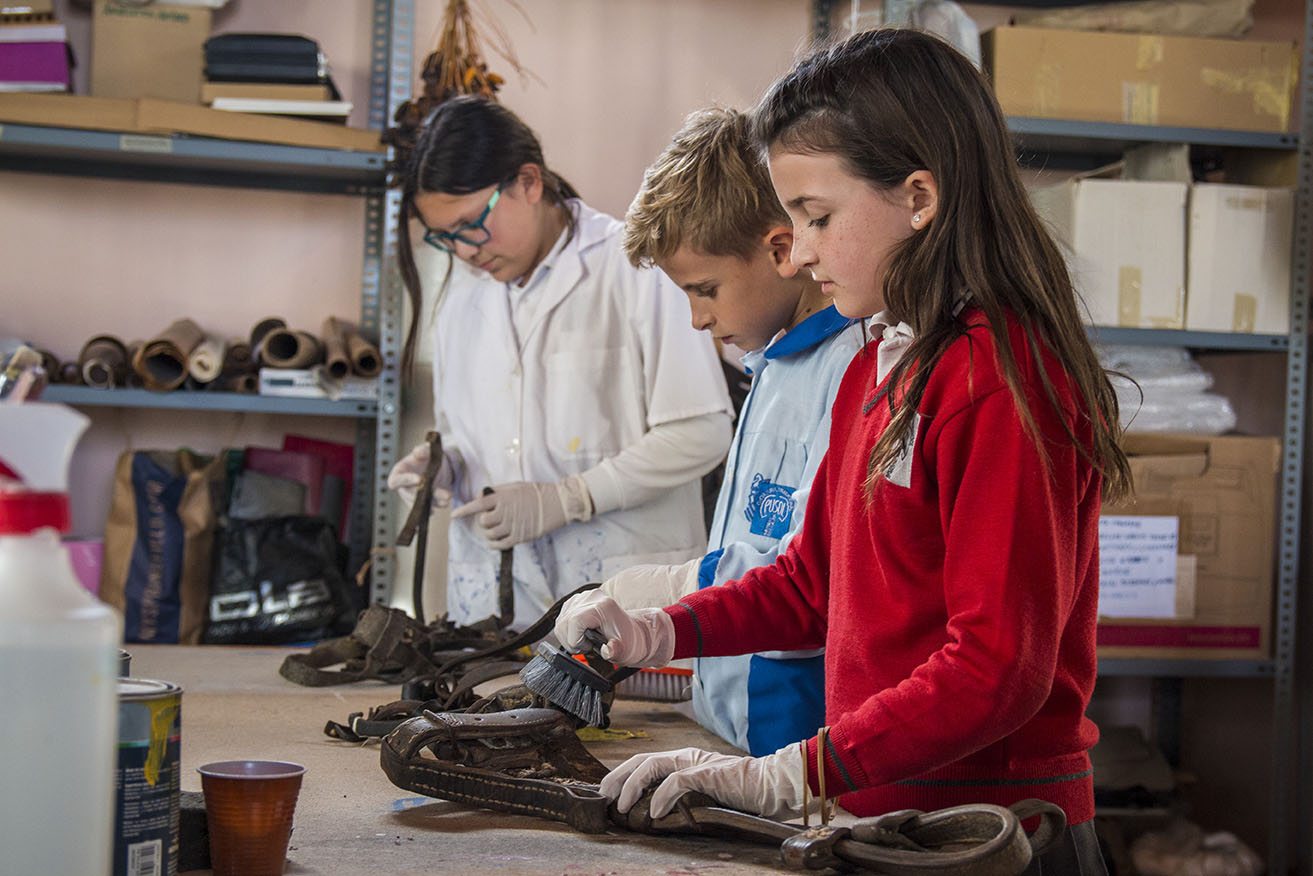
Presentations on the temporary exhibition RURAL WOMEN: THE INVISIBLE WORK
30-03-2021
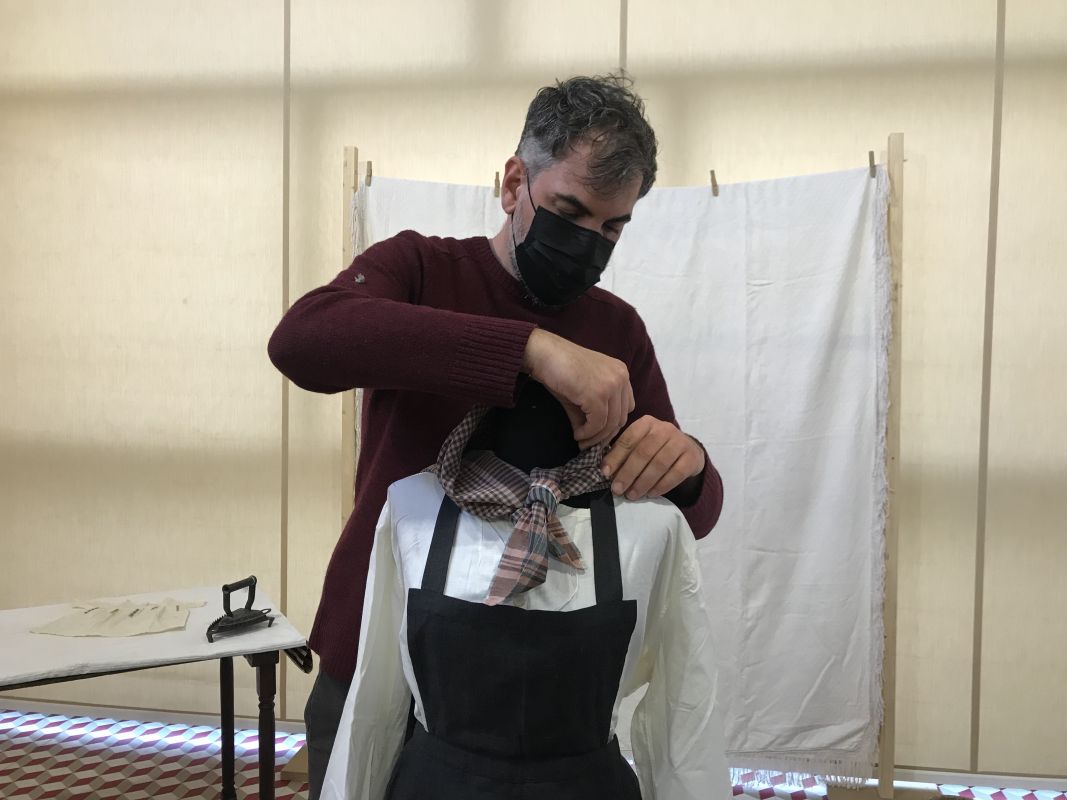
In the countryside, the woman rules the house, prepares clothes and food, and raises her children as the woman of the city, but also plays very important roles that is free. She takes care of the farm animals and often of the beasts of labor; she cultivates or cultivates herself the garden and the garden immediately to the house; it is she who carries out almost all the purchases and even almost all the sales, and is always an active collaborator of the man of the field in all his works and in all his companies (Martí Alpera, F. (1911). Rural schools. Gerona: Dalmáu Carles)
From an academic environment, at the beginning of the 20th century, we had this vision of an agent practically invisible to society: rural women. This description of the reality of rural women, generic for the entire Spanish geography and even for much of Europe, with all its topics and limitations, aims to extol his figure. In one country, such as Spain in the early twentieth century, whose economy was largely based on agriculture, the role of the female gender was strategic. The woman was regarded primarily as the centre of the family, her primary task being to get married and have children, above all other matters. Rural women therefore had a double responsibility on their shoulders: first of all, to 'settle' the man in the land of labor, preventing the exodus to the cities that at that time demanded a great deal of manpower for industry; secondly, that of having children and educating them in the love of agriculture, ensuring a demographic continuity in the rural environment.
We therefore find that, in certain circles, the relevance of rural women in society is taken into account, but always subordinated to their role as mother and wife, always as a complement that, Although it is necessary for man to carry out his work and for society to prosper, it does not cease to have a secondary role. As much as his effort and work was, it has been considered a 'help' for the head of the household.
Even in the educational sphere, the female gender was not spared from this slab: School must prepare girls to be good housewives, excellent mothers of families. It must awaken in them the taste of domestic things, preserve them from hobbies and whims superior to their condition and endow them with useful skills and knowledge and a spirit of foresight and initiative that greatly contributes to their happiness and that of theirs. And so the girls must learn to shop, to sweep the floor, to scrub toilets, to prepare a liquor and a sweet dish, to take care of a sick person, to know domestic hygiene, to avoid adulterations and, finally, to get, for when they are women, that not everything be application and good desire, but also knowledge, success, intelligent and fruitful work. (Martí Alpera, F. (1911). Rural schools. Gerona: Dalmáu Carles).
If we limit ourselves to the local environment, to the nearest reality, there is no exception to the rule: the task of the woman is to marry. In those ancient times, the single girls of the Camp d'Elx, had no alternative future apart from marriage. Marriage was the only acceptable way out in order to guide his future life, starting from his youthful age. The alternative was to stay single for life, a circumstance that very few girls willingly accepted. Usually, if that happened, it was against their will. Getting married and starting a family was the only goal that all single girls pursued. That’s why, from a young age.
The most important thing for single girls was to have the nest made for when the time, always desired, of marriage was presented. This means that, in many cases, the trousseau was made before they had a boyfriend, and sometimes the girls aged unmarried, had their trousseau made and never married, which was a great frustration for them. (Soler Vicente, A. and Brotons García, B. (1986). S'ha perdut una cultura del camp d'Elx. 57-58).
The main occupation of women in the Camp d'Elx is that of housewife, but in the local case they used to have some activity related to the footwear industry, which was not considered a complement to the family economy, mainly agricultural: Throughout the year the mother, as a housewife, and the daughters, if any, sew the clothes, wash and arrange the pets of the house, also do work, such as making hemp rope for the soles of espadrilles, industry that is in Elche, and works are distributed to rural and urban women (Pusol School Museum. (c. 1990) Activity of an agricultural family. Unpublished).
In short, we see that at the turn of the twentieth century, rural women were a passive subject for society, which was to serve with self-denial as the basis of a demographic and economic structure, but whose work was hardly recognized. Has this perception changed?
We cannot say that currently the only vital alternative of a woman is marriage, neither in the rural environment nor in any other, but what about those who choose the agricultural or livestock activity, who choose to stay in the countryside? What does today’s society know about the reality of rural women, so far from that of influencers? Are these women a model of resistance or are they the stronghold of a dying society? The UN estimates that rural women are a quarter of the total population of the Earth, yet are they visible to our eyes?
Author: José Aniorte, cultural manager of the School Museum.