An Italian accordion, featured piece in our new handover
16-06-2021
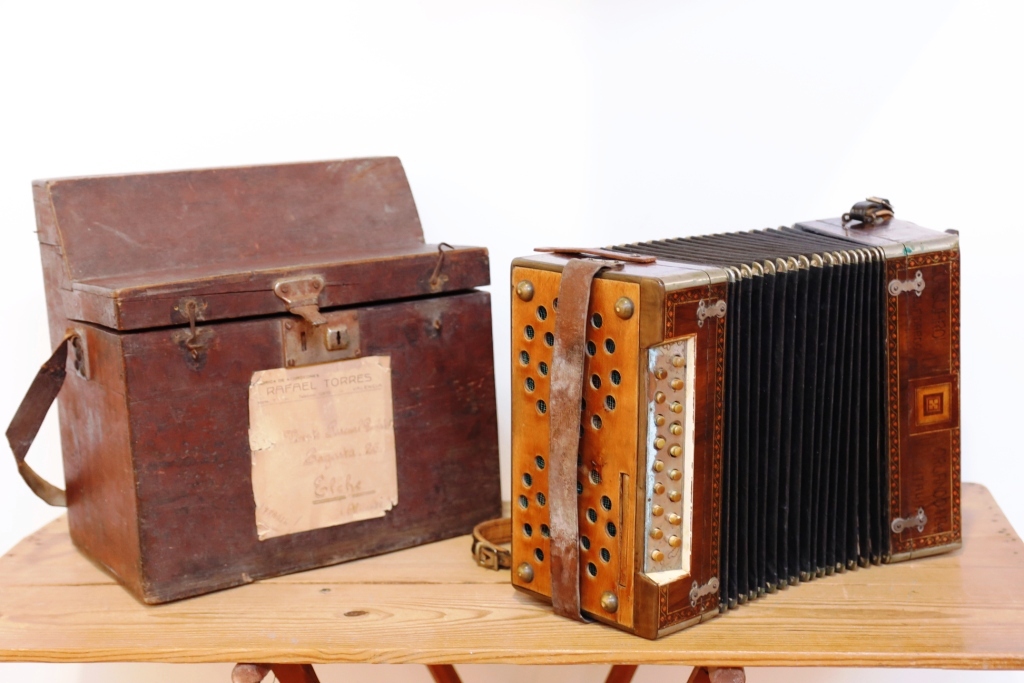
Between the pieces more prominent of the our new exhibition " Els Blancs". On Sunday afeternoon at the countryside of Elx. (Els Blancs. On Sunday afternoon at the countryside of Elche), We found this accordion donated by Manuel Pascual in 2019, he told us that this instrument was given by its parents when he was a children, conservated by him it is a great appreciation during all his life.
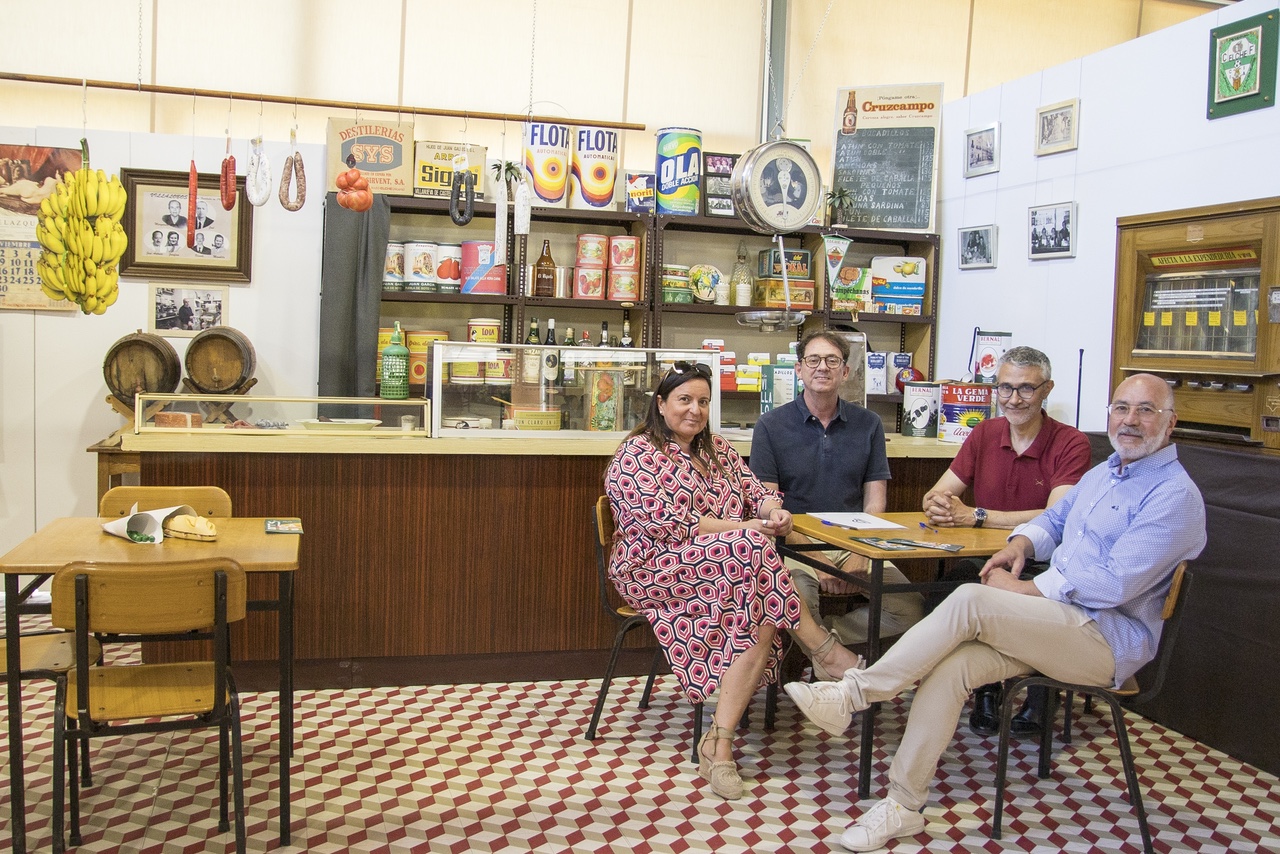
In our surrounding, the early 20th century existed a big popular adness by the music, not only to dance it or listen to it, but also interpret it. In those years, the accordion was known by all the spanish population, it was affordable and it became in a popular instrument. It come been an rural instrument, present in many farmers houses, and served to interpret the dances of fashion and tradicionals dances. Therefore its presence is specially appropiate in this exihition, where we recreate a social meeting in a ilicitano rural surrounding to 1900, our accordions goes dates back decades later.
The specimen we present has engravings, among the beautiful marquetry decorations it presents, a series of names that take us to its manufacturer: Orlando Quagliardi & Figli, based in the Italian town of Castelfidardo. This small municipality is internationally considered as the city of the accordion', for settling here a lot of specialized manufacturers that still today make accordions manually, being the most appreciated in the world. This Italian population had its busiest time in the middle of the 20th century, the time to which our featured piece belongs, when hundreds of thousands of accordions were exported to the whole world from there.
We observed in the box a paper with the delivery address on which appears the letterhead of the Rafael Torres accordion factory, located on Calle Norte nº7 in Valencia, which apparently opened its doors in 1913. Valencia was the major producer of accordion in Spain, ahead of Madrid and Barcelona, but as we see the national production was simultaneous with the import of instruments from abroad, due to the high demand for instruments that existed.
You can find very interesting information about this Italian industry in https://bit.ly/3zbqfJx.
Author: José Aniorte, cultural manager of the School Museum.