Slaughter, a widespread gastronomic tradition
11-05-2021
Before the appearance of butchers' shops and supermarkets, families raised farmed animals for their consumption, with the woman usually responsible for slaughtering them and preparing their meat for cooking. On designated days meals took place that required further elaboration, due to some party or celebration. In our lands, Sunday, considered a day of rest, prepared a stew, a paella or a crust basin. Throughout the year a turkey was raised whose meat was used to make balls on Christmas Day or, as they say in the Camp d Elx, the terongetes of ' Nal'.
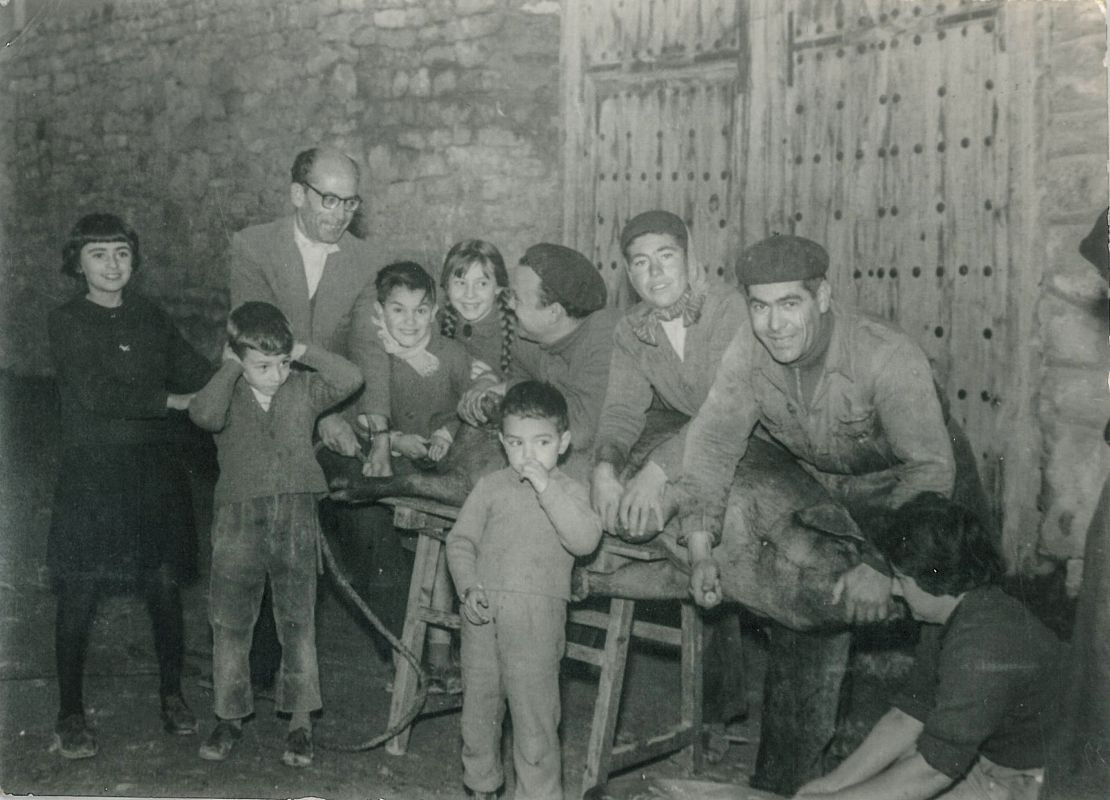
But one of the most widespread popular customs throughout Europe is known as the killing, which consists of the slaughter of a pig -even two in some houses- to take advantage of their meat and thus obtain food reserves during the following months. In the rural environment, this was carried out in a house, where family members, friends and neighbors collaborated in the whole process.
The event was planned for November, coinciding with the arrival of the first cold days, which facilitated the production of sausages and favored their conservation. In addition, the atmosphere was festive, as these provisions formed the supply of family pantries for a few months, even a whole year in some cases.
For the sacrifice they could hire a butcher, person in charge of killing the animal and who also collaborated in the cutting of the meat. This one took some samples of the liver and the roasting of the animal, which were taken to the veterinarian to rule out any disease that could affect when consuming their meat. Once the approval was given, they began to prepare everything. Sausages were made with the guts of the pig, tired with the bacon, the blood was reserved for making blood sausages, the hands were kept in salt to add them to a stew, the lard was reserved for sausages and for Christmas butter... everything was taken advantage, as the popular saying goes, "even the walks". Since there were no fridges, the sausages were stored in the chamber of the house, a room located on the top, hanging from a cane, as a food reserve for the whole family.
In many villages the tradition of carrying out the massacre continues on November 11, St Martin’s Day. This can last several days, due to the amount of processes required, always maintaining its playful and participatory character.
Author: Borja Guilló, technician of the School Museum.