Auca, a game of chance that has disappeared
01-07-2021
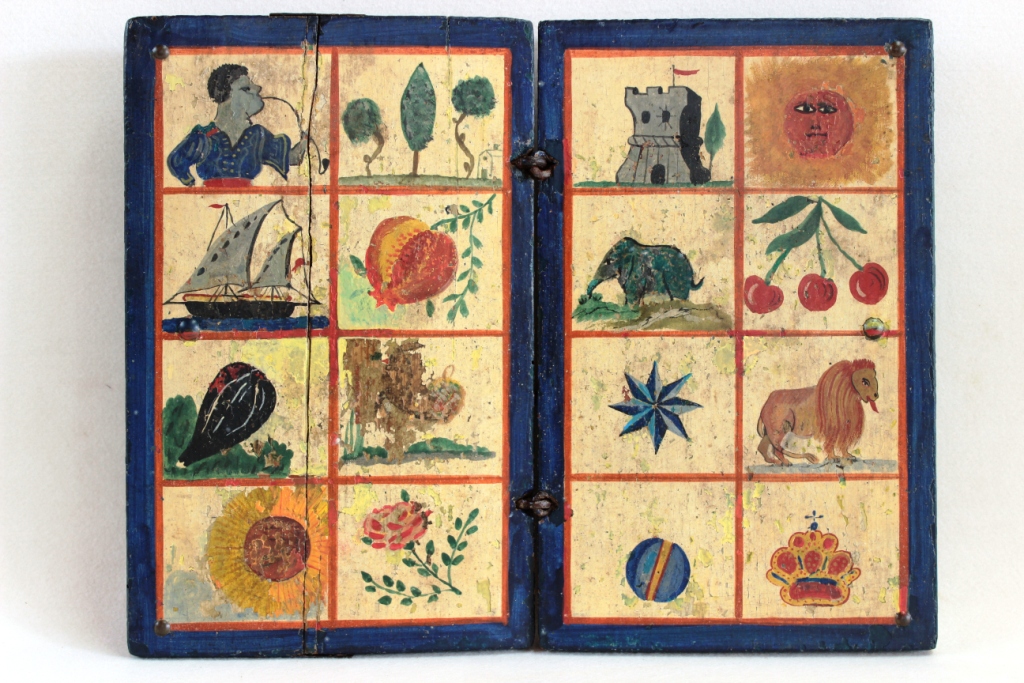
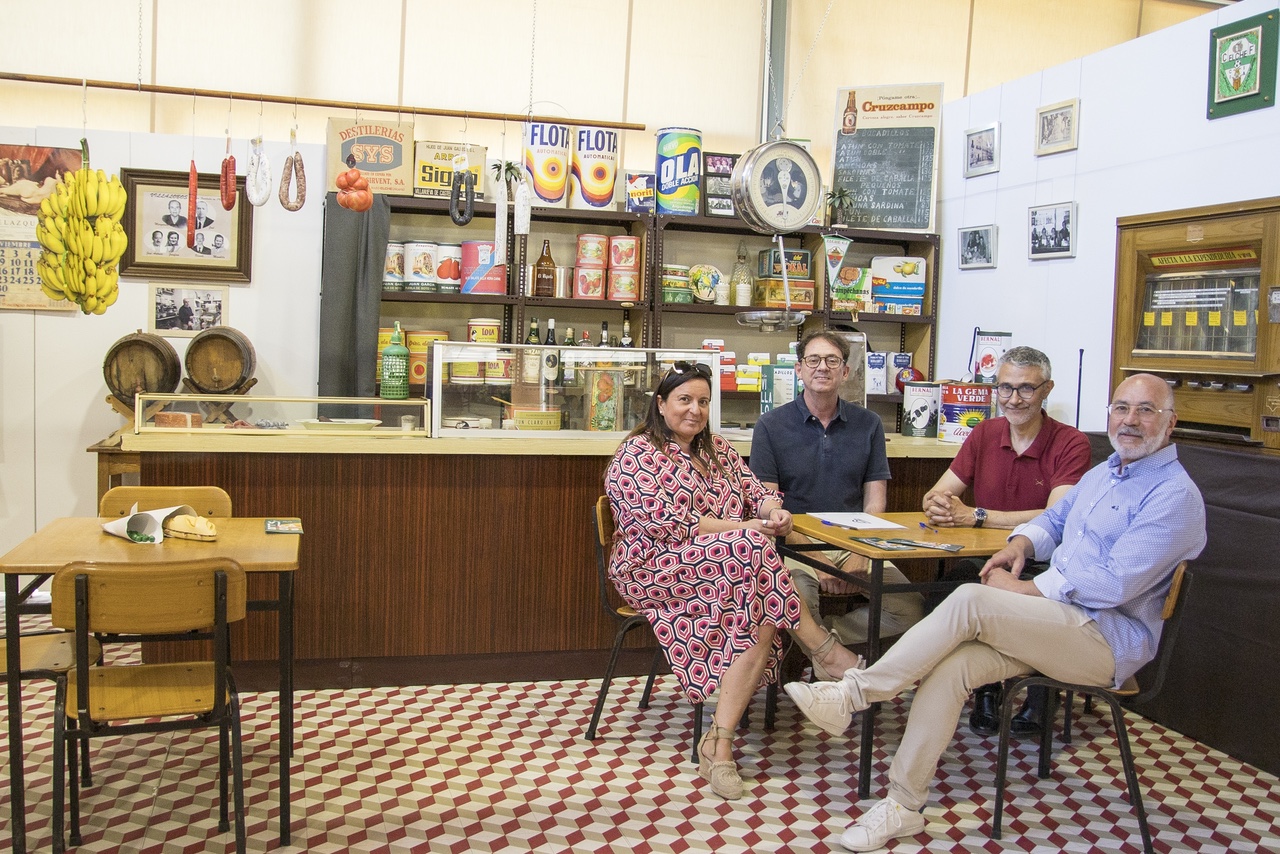
One of the biggest attractions of our new exhibition, Els Blancs. A diumenge per la vesprada al Camp d'Elx', consists of seeing the post of the auquero. Its base is an ancient game of chance, the auca, of which we have kept four boards, of which we have exhibited three.
We recovered for this blog a nice article written by our lifetime director, Fernando García Fontanet, telling how the first of these boards arrived at the museum, accompanied by the other elements necessary for the game. In the text we perceive the emotion of the discovery of this old custom of our field, which was deepened thanks to the testimony of two informants of our village, and serves as a basis for our current research on this custom, which are being very fruitful and which we hope to be able to share soon.
A characteristic element of the social gatherings of the people of the countryside was the "auquero". This peculiar character traveled a fixed itinerary through the different rural parties, on the occasion of the celebration of the different festivities and the "blancs", made the people of the countryside meet. The "auquero" prepared his "paraeta", in the strategic and traditional place, with "les cabasets" made of esparto full of "torrats and ametlles" and some typical sweets, such as "els coquetes and els rollets" of anise that were the prize given to the bettors of that game so characteristic of those times and that was called 'auca'.
The Agricultural School Museum of Pusol, has a complete set, thanks to the donation made by a neighbor of our departure called Jaime Antón Candela "the Molaret" through his daughter Paquita, who was a student of the school. They were the beginnings of the formation of our Museum.
As can be seen in the photographs consists of two boards joined by hinges (so that they can be closed) which, when unfolded, form a square of 35 cm side. It has a border painted in red, 1.5 cm. wide and the rest is divided into 16 squares of 8 cm. side.
In each of them there are hand painted the different motifs that are:
The Sun, the Pimpante ( an Arab smoking his narghile ), the Castell, the Rose of the Winds, the Pins, the Crown, the Conill, the Boat, the Bacora, the Sireres, the Flower, the Gat, the Lluna, the Mangrana, the Pollastre and the Mòn.
The drawings are charming and remind us of the naif style
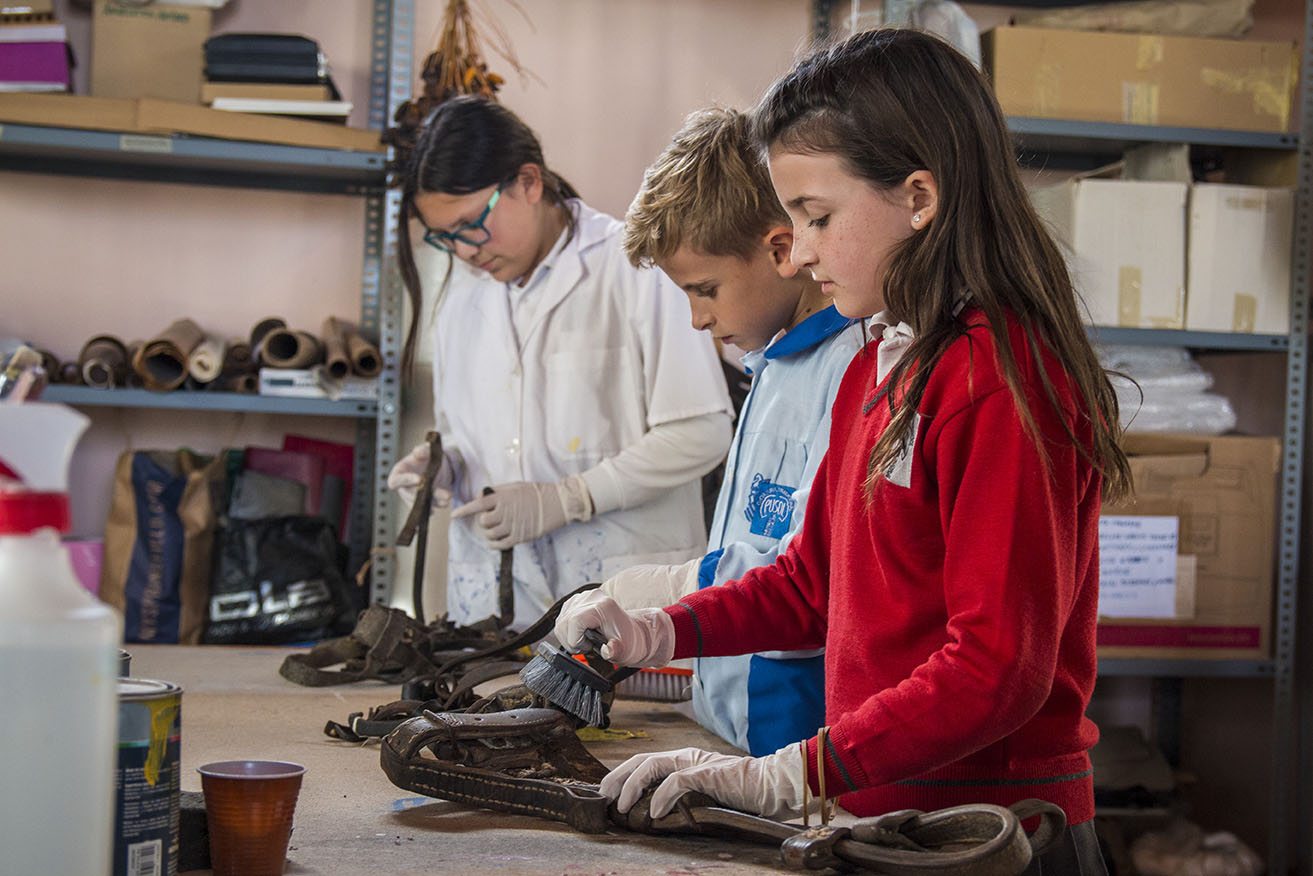
These tables came to the Museum very deteriorated, since they were forgotten many years in the house’s chamber. They had attacked the woodworm. After almost two months of restoration work, we can say that they look good.
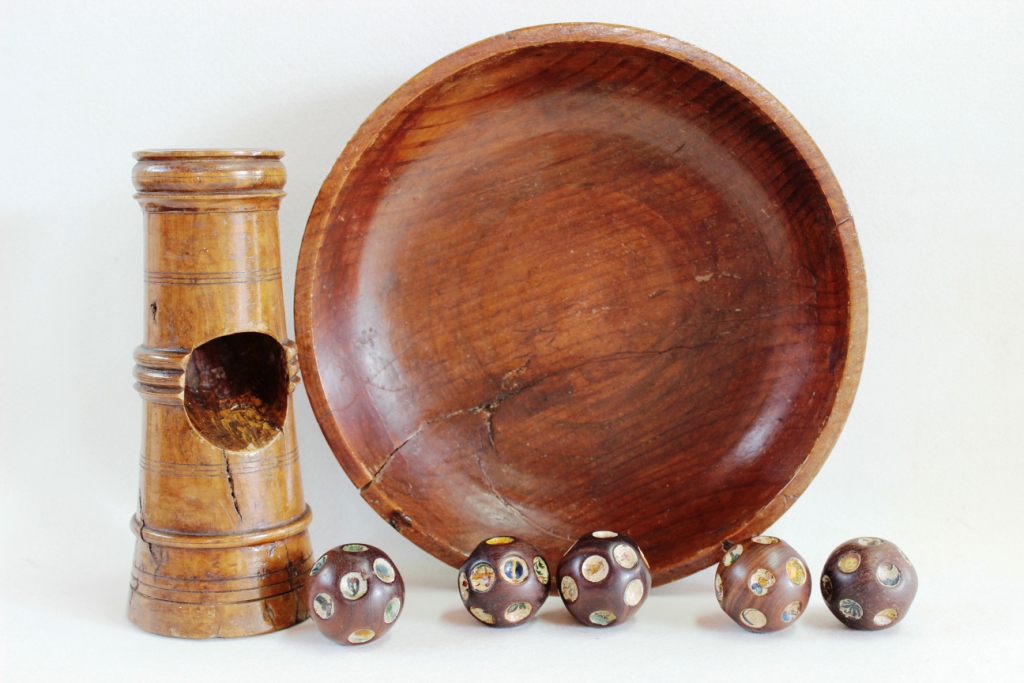
The drawings of the boards are faithfully reproduced in each of the two wooden balls that the game has, in a few notches practiced in the wood (circles of 1,3 cm. in diameter) and were thrown into a wooden bowl by a tower that is hollowed out from its top to its middle.
The balls were played by the bettor by inserting them through the top of the tower, which was located next to the bowl, and fell into it.
The drawing on the top of the ball was the winner.
We must note the beauty of the set once stopped ( presto for the game).
The tower, the balls and the bowl are carved in very hard wood and have a dark tone. We have not yet determined what kind it is.
According to the elders of the game, big and small participated in this game. All.
Only one player threw balls. This one made his bet ( used to be 5 or 10 ctms. ) depositing the coin on the chosen drawing, (other people could also bet) he threw the ball and if he won, the "auquero" gave him the prize: a cartridge of "torrats, almetlles or a coqueta". Anyway the coin was in benefit of the owner of the Auca.
We have found references to this curious game in a small work, which is in the Museum’s collection, entitled "DEL FOLKLORE ILICITANO" written by José Pascual Urbán, and published in 1943. In this booklet he talks about the "famous game of bis-bis or Auca, among others" (sic).
We believe that this game could have variations in the number of drawings, themes, ways of playing, within the Camp d'Elx.
Within the recovery program of the Center of Traditional Culture of Pusol is contemplated the deepening of these issues.
(Data provided by Emeterio Vicente Antón and Josefa Coves, retirees from Pusol).
Author: José Aniorte, cultural manager of the School Museum.