The collection of donations
24-02-2021
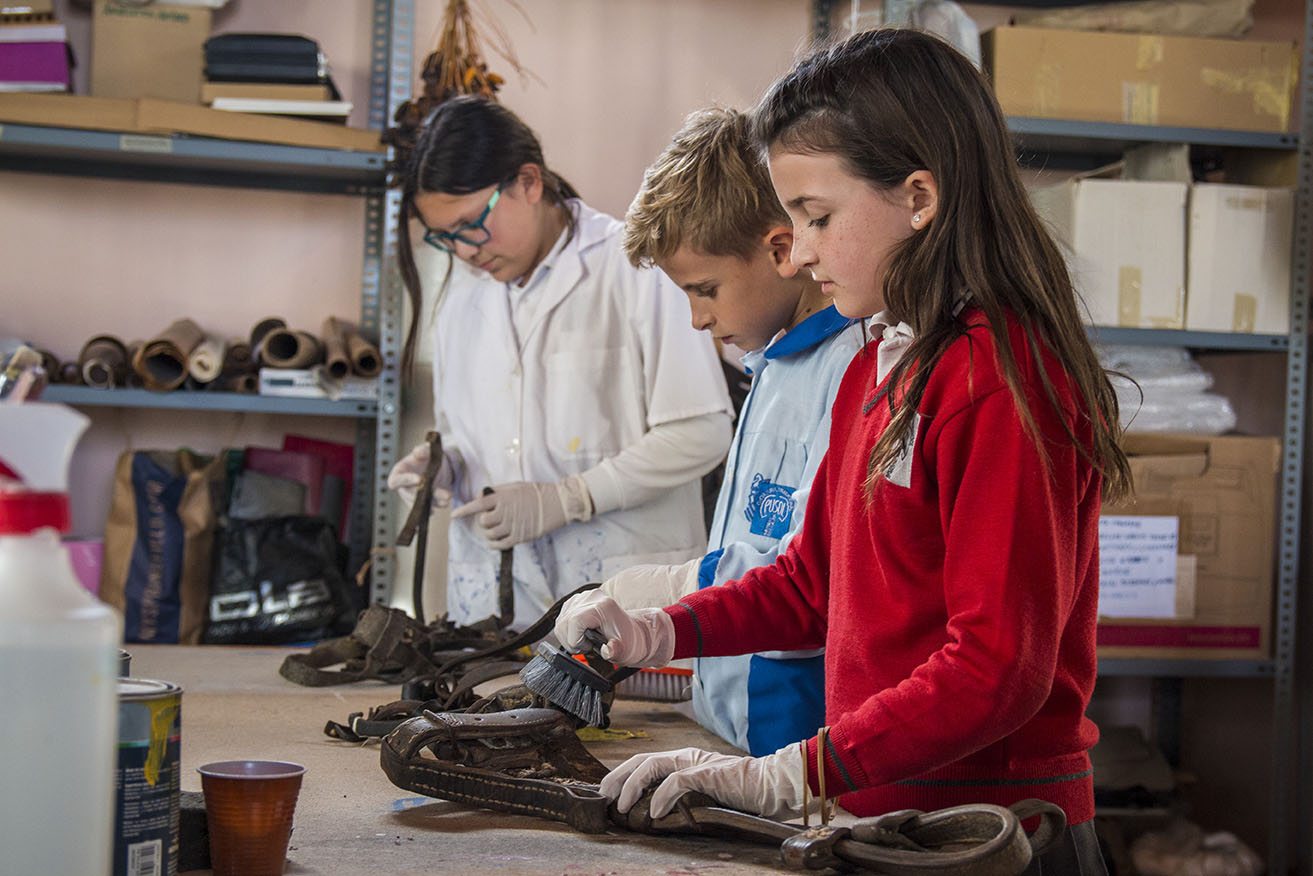
From the beginning of the 1970s, the Pusol Agricultural School Museum, the name given to the museum at first, began to collect and preserve pieces, mostly tools and ploughing implements, donated by the neighborhood of Puçol and the families of the students. These first pieces were the cornerstone for the further development of the project and essential for the study of the traditional way of life of the area.
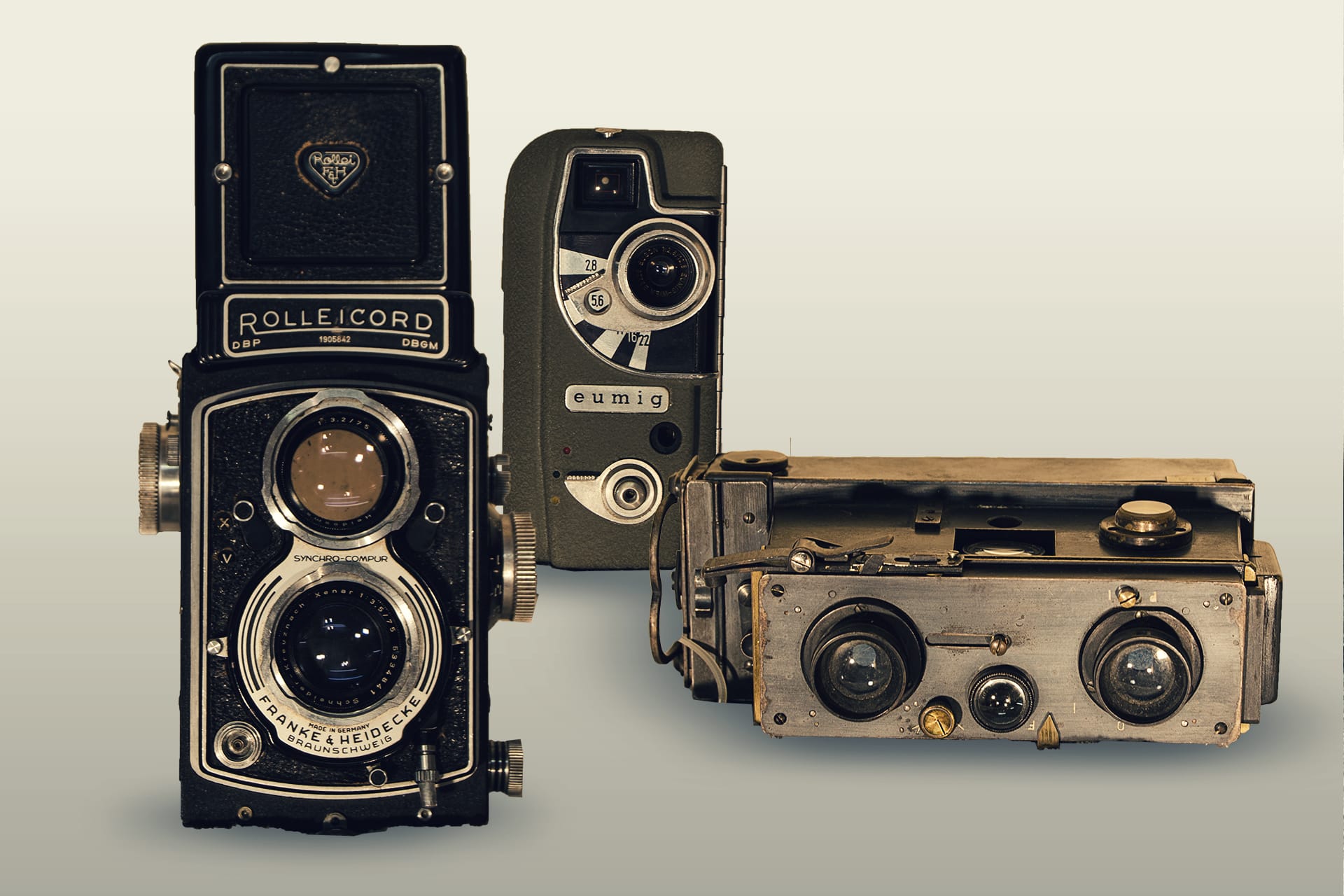
Throughout these five decades, the museum has collected nearly 100,000 pieces, which have become part of the collection of the Pusol School Museum. A significant part of these donations have reached our facilities through the private vehicles of the/the donors. Other times, due to the large volume of the donation or the large dimensions of a piece in question, the museum team moves, after having previously contacted the donor, and takes care of the collection.
We have visited the homes of many neighbors of the city and the Camp d Elx and we have seen each other in all kinds of situations. We have collected pieces, more or less interesting, that end up being exposed sooner or later, but those tessituras in which we have seen ourselves and that years later we remember between laughs also form part of our own history as a Project.
For sharing some of these anecdotes, I remember one of the first times I accompanied my colleagues to collect donations. We arrived at a building on Benito Pérez Galdós Street and entered the portal of the building accompanied by the donor. The piece we were going to pick up was on the terrace, so the first thing I did when we accessed the portal, and I imagine my colleagues did, was look for the elevator. And of course... to everyone’s surprise, there wasn’t. So, as we went up the narrow staircase, the man was telling us that the building was planned at the time as a hotel, but that finally the project did not come together and the apartments were sold as individual dwellings. We arrived at the terrace, which had a kind of communal storage room, raised in its origin as a laundry room of the hotel, to which the community of neighbors intended to give a new use. The piece to collect was an industrial washing machine (or so I remember) of the sixties, designed for the whole laundry of the building. When the donor opened the storage room door and I saw the size of that metal thing, I thought about the morning that was waiting for us. The first image that formed in my head were those narrow stairs that we had just climbed. I was sweating my forehead before I started. Fortunately, my partner, who manages the collection of donations, rejected that washing machine because it was impossible to lower it on the street.
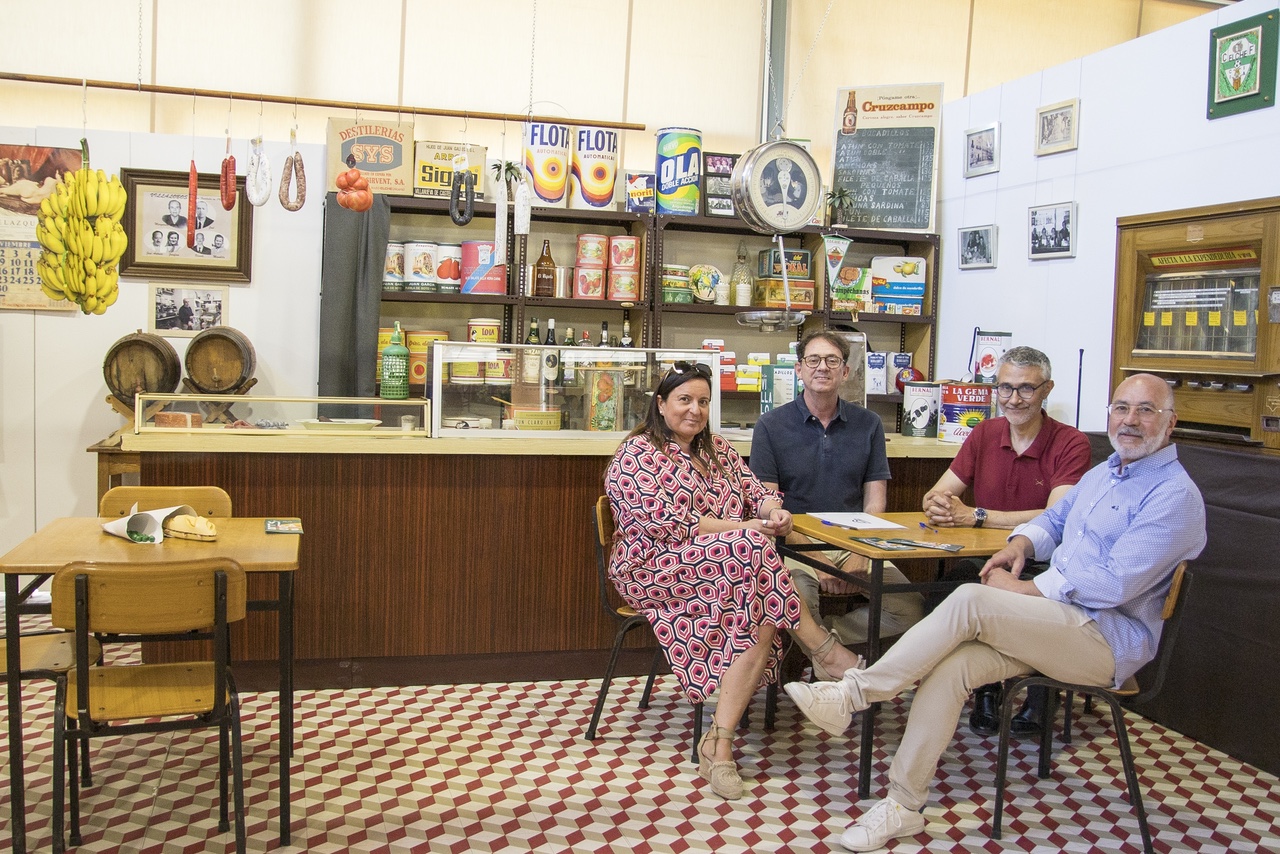
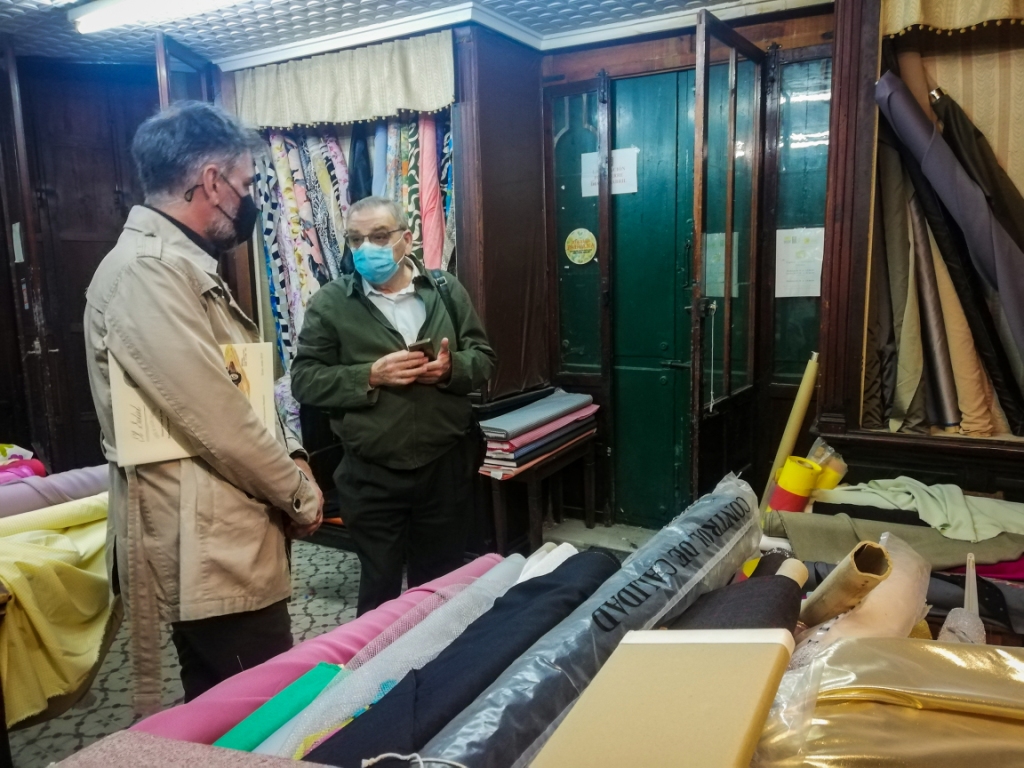
Another more recent anecdote happened on El Salvador Street. We visited the old fabric store Tejidos Castaño, accompanied by one of its last owners, José María Peral, to study the logistics that we had to carry when we returned to get some pieces. The premises kept the essence of what it was at the time, as it practically kept the original furniture until its closure in 2013. Once the premises were seen, the visit continued in the family house, located on the upper floors. The originality of its finishes was fascinating: its pavements, the old kitchen tiles, its interior patio... ; the enthusiasm of the situation invited me to explore the latter. I opened a window on the first floor that gave access to an upper gallery, which covered the perimeter of the courtyard almost entirely. After three steps into the gallery, the creaking of the ground and the movement under my feet awakened me from that enthusiasm. I thought quickly and retraced my steps with the care I had not taken upon entering. I did not breathe quietly until I reached the interior of the house. It was at that moment that I observed that many of the metal squares that supported the gallery were broken and rusty. I honestly don’t know how the ground didn’t give way under my feet after seeing the state he was in...
Pese a esta serie de contratiempos, que finalmente no fueron, el esfuerzo merece la pena por todas aquellas donaciones que pasan a formar parte de los fondos del museo. En muchos de estos desplazamientos, el volumen de piezas es tan grande que no hay tiempo para poder ver todo lo que cargamos en la furgoneta. Ha pasado que, tras inspeccionar la donación en las instalaciones del museo se han encontrado piezas muy interesantes. Una vez gestionadas e incluidas las piezas en el inventario, se decide la ubicación de las mismas. Cada una de las piezas que recibimos puede ser expuesta en alguna de las secciones en las que se divide el recorrido del museo o conservada en alguno de nuestros almacenes. Allí permanecerán con el resto de los fondos, a la espera de formar parte de nuestra próxima exposición temporal.
Autor: Borja Guilló, técnico del Museo Escolar.